What a wet Ilkley cellar usually is
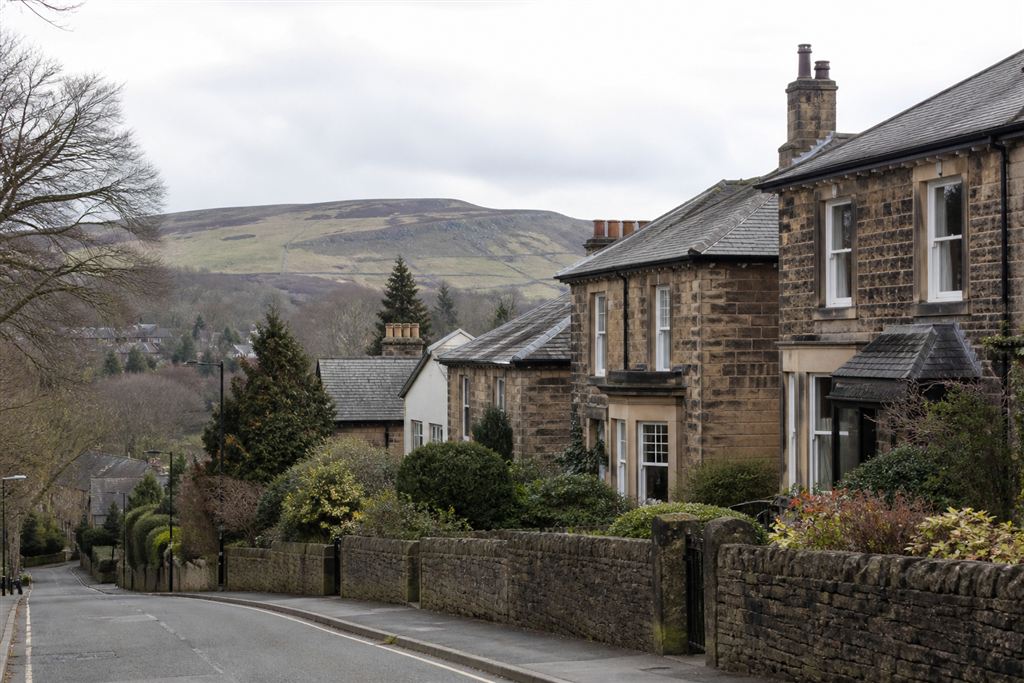
Ilkley’s below-ground rooms were not built as coal cupboards for an interwar estate. The spa-town boom after the railway put millstone-grit villas on the hillside under Rombalds Moor: Wells Road and Queen’s Road climbing toward the Cow and Calf, Parish Ghyll Road and Hebers Ghyll Drive in the becks, Cowpasture Road and Springs Lane, Panorama Drive looking across the valley, Crossbeck, Victoria Avenue, and the Grove-side conservation streets.
The room under them is typically:
- millstone grit with lime joints, not 1930s brick and render
- a real storey of headroom, not a sack-hole — which is why conversion talk is common here, and why this site still refuses to make conversion the money term
- entered from an internal stair, with a light well or area on the downhill or garden side of a stepped plot
- sitting on a slope: moor and perched water above, the River Wharfe below
Ben Rhydding (Wheatley Lane, Wheatley Grove, the later stone semis toward the station) is still Ilkley, but the cellar is often shallower than a Wells Road villa. Middleton, north of the Wharfe, is the opposite problem: closer to river-level water, not moor runoff. The survey treats those as different houses, not one “Ilkley basement” template.
Houses on the later estates off Skipton Road without a traditional cellar should say so on the form. We will not invent Type C for a floor slab.
Ilkley Moor runoff is not a valley water table
Rombalds Moor sheds water into Backstone Beck, Hebers Ghyll, Spicey Gill and the small cuts through Panorama Woods. After rain on the moor, that water is already moving downhill before it meets a cellar wall on Wells Road or Parish Ghyll. Gritstone is coarse and permeable. Lime joints were meant to breathe. The path into the room is through the stone, through the light-well reveal, and along the downhill flag floor — not a canal overtopping, and not clay holding a puddle on a flat Leeds plot.
Cellar water in this cell is usually:
- moor runoff and perched water in the grit after a wet week on the Cow and Calf side
- a light well that has no working drain, on a plot that steps down toward The Grove or the river
- seepage through millstone grit that a previous cement coat tried to seal
- on Middleton / riverside plots only: Wharfe-side groundwater — a different question, asked only when the house is actually there
It is not Meanwood-valley clay, and it is not Aire/Worth floodplain water in a mill terrace. A specification written for a King Lane semi, or for a West Lane back-to-back, will misread the invert, the stone, and the conservation constraint. That is why this site does not share body copy with those towns.
After rain on the moor, homeowners on Queen’s Road more often see water tracking at the light well and salt on the gritstone than a river coming under a terrace door. See: moor runoff in a hillside cellar
Type C, tanking, and slurry — on millstone grit, not in specifier-speak
British Standard BS 8102 describes three ways of keeping groundwater out of a below-ground room. On an Ilkley villa we explain them like this:
- Type A (barrier) — a cement slurry or sheet stuck to the gritstone, hoping a porous sandstone and lime joints never move. On this stock that coat often blows at the light-well reveal, at the first hillside settlement, or where salts crystallise behind it. See the FAQ below; the longer version is on why slurry tanking fails on Ilkley gritstone.
- Type B (structurally integral) — the concrete itself is the tank. Victorian spa villas were not poured that way.
- Type C (cavity drain) — a dimpled membrane on the inside face, a channel at the floor/wall joint, and a sump that takes water to a drain you already own. The gritstone can still get wet; the room stays usable; the elevation Bradford’s conservation officers can see is left alone.
tanking a cellar on millstone grit (what we specify) why slurry tanking fails on Ilkley gritstone Type C that leaves the stone elevation alone
Tanking membrane and cavity drain membrane show up here because they are pieces of an internal Type C lining that leaves the gritstone elevation alone. We do not retail them. This is not a materials shop.
Why a discovery survey comes before any figure
A pavement “free estimate” cannot see:
- invert levels on a slope — whether the existing drain is above or below the cellar floor on a Wells Road step
- where a sump can discharge without emptying onto the downhill neighbour’s garden toward The Grove
- whether the house is in the Ilkley Conservation Area, listed, or only gritstone-sensitive in practice
- whether failed cement tanking has to come off the stone before a membrane can sit
- whether City of Bradford Metropolitan District Council Building Control will want a full application (Ilkley is Bradford district, not Leeds)
Booking is for a cellar discovery survey — priced and scoped — of a hillside millstone-grit room. We do not advertise a complimentary estimate to get a foot in a Wells Road door.
Cost is a range with variables, not a doorstep number. Full Type C on a shallow Ben Rhydding store and full Type C on a deep Wells Road villa with a light well are not the same job. What cellar waterproofing costs in Ilkley
Conservation-sensitive work: the elevation stays
Ilkley’s money streets are millstone grit. The Grove, the lower Wells Road grid, and a number of listed villas sit in or next to the conservation area. Bradford planning notices external coatings, excavated frontages, and replacement stone more readily than an internal lining nobody on the pavement can see.
Type C is installed from inside. We do not hack the gritstone elevation, do not slurry the outside as a first move, and do not open a trench across a stepped front garden facing the moor unless the survey has exhausted internal discharge. That is the conservation argument and the hydrology argument at once: the water is already in the stone; managing it on the inner face is the honest spec.
Quiet access: a van on a Wells Road drive or a Parish Ghyll pull-in, not a tanker blocking The Grove. If a pump-out is needed on a flooded-cellar first visit, we say so on the day. Flooded cellar in Ilkley
Operators who already have Ilkley projects (honest)
Quoted search for "cellar waterproofing" Ilkley is still a thin SERP: mill location pages and one Morley drainage template with a placeholder year count. The real work already done in this town sits on project galleries, not on a neighbourhood money URL.
Pure Basement Systems have published Ilkley case studies. YDC include Ilkley in their Leeds / Harrogate / Ilkley geography. Those are genuine operators with genuine jobs. This site does not smear them, does not claim their projects, and does not pretend the town has never seen Type C.
What they do not own is a landing page whose H1 is cellar waterproofing in Ilkley. This page exists for that gap: hillside invert, millstone grit, conservation elevation, Bradford Building Control, and a survey of this house. If a neighbour already had a conversion by one of those firms, say so on the form — it changes nothing about whether *your* light well still needs a drained cavity.
We also do not chase basement waterproofing as a money phrase. In this town the room is a cellar under gritstone. Conversion of that cellar into a habitable room is an upsell after it is dry. Cellar conversion in Ilkley (after waterproofing) Every button on that page still books the waterproofing survey.
Ilkley Cellar Waterproofing does not list Alwoodley, Keighley, Moortown or Bingley. Immediately adjoining streets that are actually Ilkley — Ben Rhydding, Middleton, the Wells Road climb, the Grove grid — are in play. Keighley mill terraces are a different town and a different site, on purpose.
FAQs
Cement tanking on millstone grit — why it often fails in Ilkley cellars
Millstone grit is a coarse, permeable sandstone. Water from the moor does not politely stop at the outer face; it moves through the stone and through the lime. Victorian lime mortar was meant to breathe. A dense cement slurry seals that face, drives moisture sideways into the light-well reveal and the flag floor, and then blows when: - hillside settlement opens a hairline the coat cannot follow - salts from the grit crystallise behind the skin - hydrostatic pressure after rain on Rombalds Moor is more than a “rising damp” trickle - someone overlays a second coat on the first failed one That is an Ilkley stone problem, not a generic “tanking fails” slogan and not a manufacturer diagram. The honest repair on this stock is usually to strip the failed barrier where it has lost bond and specify a drained cavity that does not ask the gritstone to become waterproof concrete. Cellar tanking vs Type C
Moor runoff vs a high water table: what the survey is looking for on a hillside plot
On Wells Road, Queen’s Road, Parish Ghyll and Panorama Drive the survey is not asking “is there a valley water table?” It is asking: after rain on the moor, which elevation is wet, does the light well hold water, is there a land drain in the uphill garden, and where is the invert relative to the stepped floor. Perched water in gritstone can look like a high table and still be runoff. Middleton and the Bridge Lane / riverside strip get the Wharfe question; the hillside does not. Mixing those two stories is how a specification written for another town fails here.
Conservation area: can we waterproof without touching the stone elevation?
Yes. Type C is an internal lining. The gritstone Bradford can see from The Grove or Wells Road stays. We do not coat the outside, do not excavate the frontage as plan A, and do not replace dressings because a tanking brochure showed an external dig. If the building is listed, the survey flags listed-building consent for anything that would affect historic fabric; the default waterproofing spec is still inside the room. Type C that leaves the stone elevation alone
Bradford Building Control vs a Leeds job — what changes?
Ilkley sits in the City of Bradford Metropolitan District. Structural waterproofing of a below-ground room is a Bradford Building Control application, not a Leeds City Council pack, not a Harrogate form, and not “included in the tin”. Fees, drawings, and the officer who will look at discharge on a slope are Bradford’s. A habitable conversion later is a different, larger application (fire, ventilation, means of escape) — still Bradford, still not this site’s money H1. The discovery survey records invert, construction and proposed outfall so the notice describes this villa, not a template.
If Pure or YDC already did a neighbour’s conversion, why book a survey here?
Because they are real operators who have done real Ilkley work — and because a neighbour’s gallery is not a specification for your light well, your invert, or your conservation constraints. Pure’s published Ilkley case studies and YDC’s Ilkley geography are facts, not insults. What this page is for: a neighbourhood H1 those firms do not currently occupy, a hillside/moor-runoff survey, and an honest Type C conversation that still starts with this cellar. We will not claim their jobs. We will not tell you they cannot do the work. We will survey the house in front of us.
Sump discharge on a sloping garden toward the town
Water on a Wells Road or Queen’s Road plot already wants to run downhill toward The Grove and the Wharfe. A sump that dumps onto the lower terrace, or onto the downhill neighbour, is not an outfall — it is a new spring. Plan A is a legal connection to the existing combined drain, with the invert measured on the slope. If the drain sits above the cellar floor, the pump exists to lift; if the only gravity path is across the downhill garden, the survey says so before anyone cuts. Details: Sump pumps in Ilkley cellars
Our house is in Ben Rhydding — is that the same job as Wells Road?
No. Ben Rhydding cellars are often shallower, later, and less likely to sit in the conservation core. Still Ilkley, still this site, still a discovery survey. Do not assume villa headroom or a light well.
If we might convert the cellar, is that what we should book?
No. Book the waterproofing survey. Say on the form that conversion is in mind so we record headroom, light well, sump position and membrane laps. Conversion is the later conversation, after the gritstone room is dry. After waterproofing