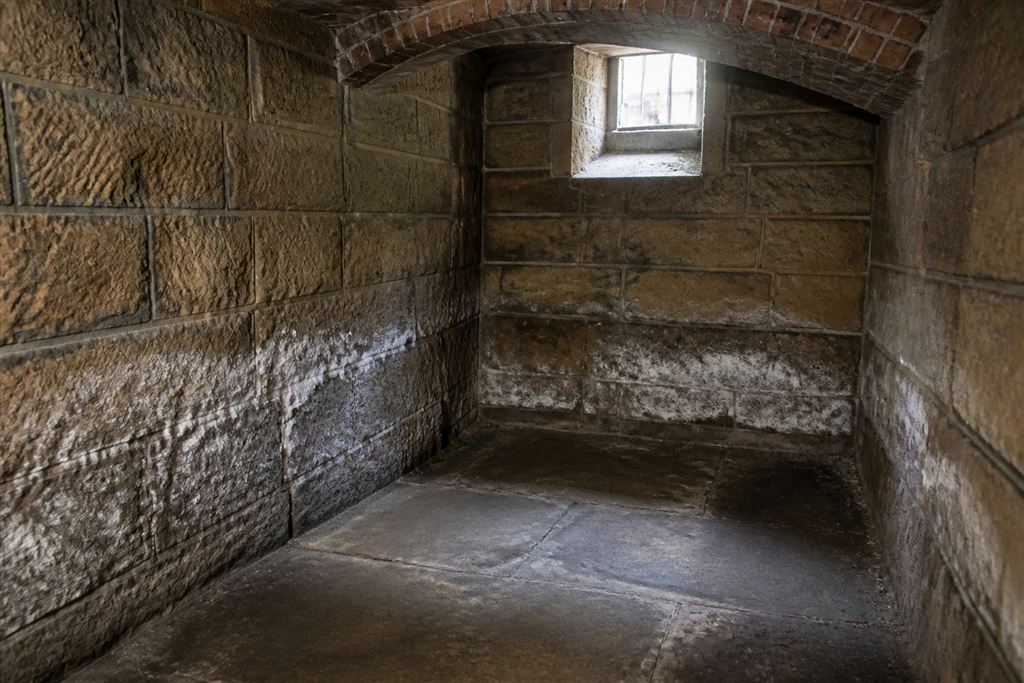
BS 8102 in the language of an Ilkley gritstone cellar
Bradford’s below-ground waterproofing standard (BS 8102) still uses the A / B / C labels. On millstone grit under Wells Road those labels mean something a conservation officer would recognise:
Type A (barrier). Coat the gritstone and hope porous sandstone and lime joints never wet through, and that the light-well reveal never opens. Hillside millstone is a poor candidate. That coat is the failed “cellar tanking” this town already knows.
Type B (integral tank). Waterproof concrete from day one. Spa-town villas were not built like that. Ignore it unless you are pouring new, which the conservation core mostly is not.
Type C (drained cavity). Moor runoff and perched water in the grit — Backstone Beck and Hebers Ghyll off Rombalds Moor — will wet the outside. Catch it on the inner face, take it away, leave the elevation. The room stays usable.
A Parish Ghyll stair is the whole briefing. bs8102 is what people type; the survey is the application to this slope.
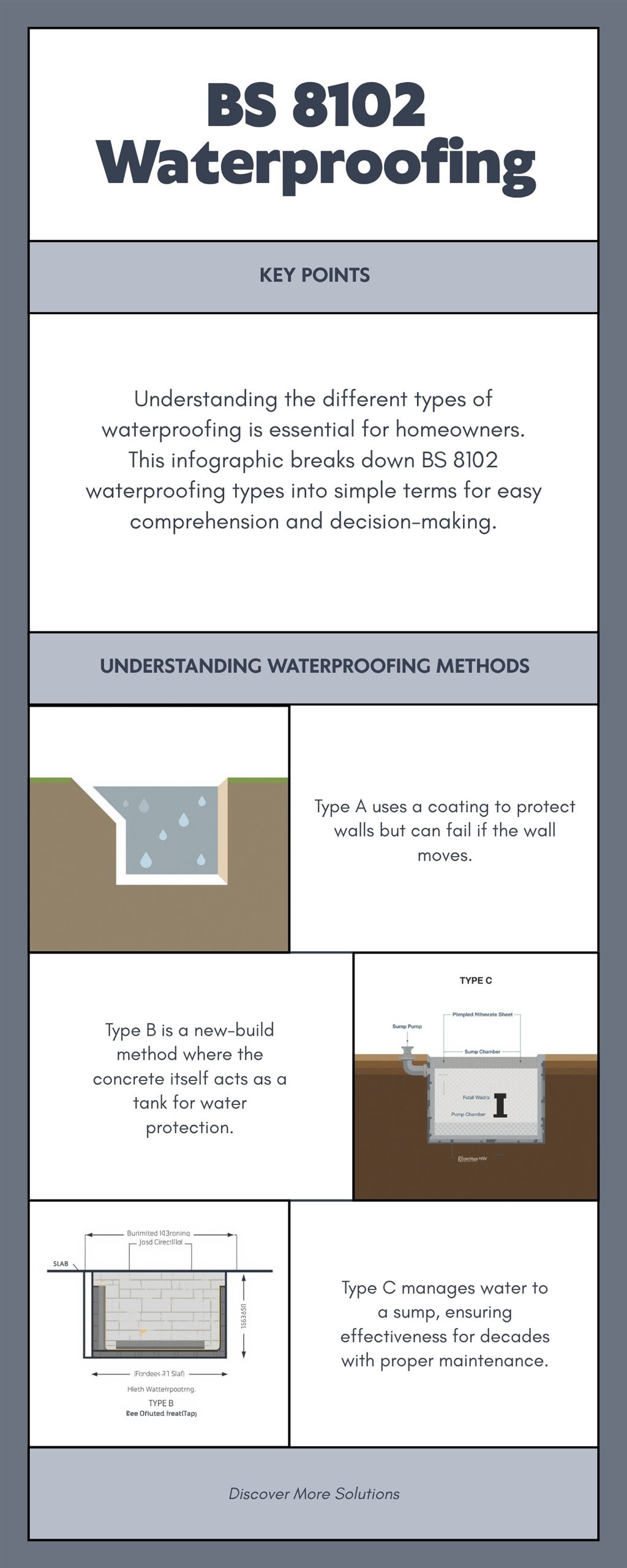
Diagram — BS 8102 types in plain English. Illustrative, not a site photo.
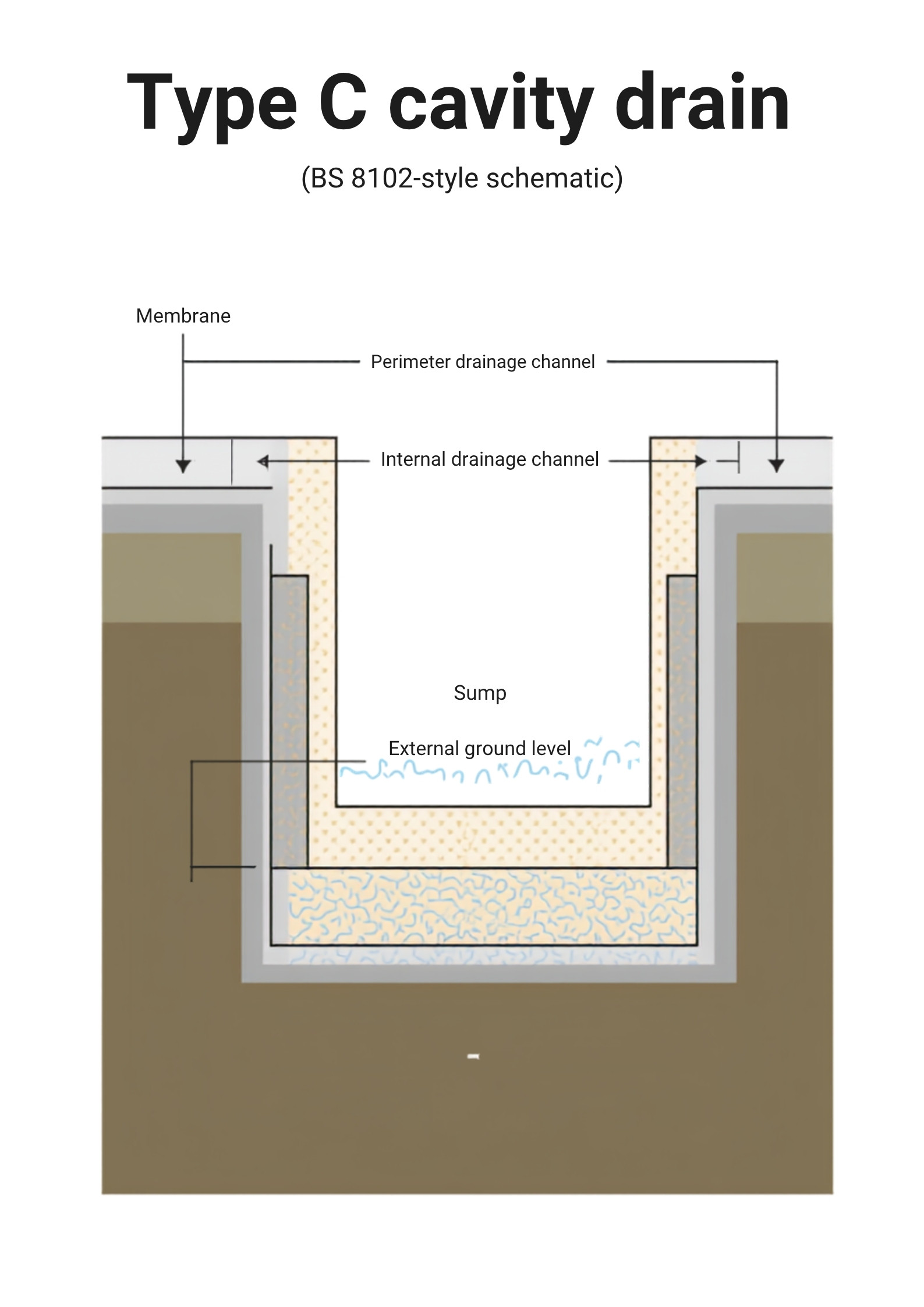
Diagram — how a Type C cavity drain system works. Illustrative, not a site photo.
Where a sump can discharge on this plot type
Ilkley plots are stepped. That is the whole problem.
- Existing combined drain — the usual legal outfall. The survey finds the invert on the slope. If the drain is higher than the cellar floor, the pump exists for a reason.
- Downhill garden toward The Grove / the Wharfe — not an outfall. Dumping onto the lower terrace or the neighbour downhill on Wells Road or Queen’s Road is a new spring. Sump page.
- Light well — sometimes has a gulley; often that gulley is silted or was never connected. Record it; do not assume it is the Type C outfall.
- Ben Rhydding — shallower rooms, sometimes easier invert, still not a licence to open the frontage.
- Middleton / riverside — Wharfe-side groundwater can sit higher; discharge and flood-history questions are different from the hillside. Same site, different survey notes.
- Conservation frontage — last resort for any new trench. Bradford notices excavations on The Grove grid.
Noise, lid, and rooms above: Sump pumps in Ilkley cellars
Cellar waterproofing systems, without the catalogue
A Type C system on this stock is membrane + channel + sump + pump + a legal outfall + a maintenance path to the lid. It is not a brand name. It is not three competing product families listed as if we were a merchant.
Waterproofing cellar walls with Type C still leaves the original gritstone in place. That is the conservation point: we are not rebuilding the elevation.
Tanking a cellar — what we actually install Cellar tanking vs Type C Cost variables
If conversion is even a maybe, the membrane laps and the sump position are recorded now so a later floor sits on the system. After waterproofing CTA still the survey.
FAQs
Is Type C overkill for a Ben Rhydding cellar that is smaller than a Wells Road villa?
Not if that room floods or stays wet and you use it. Overkill is a full system in a dry meter cupboard. The survey is the filter. Ticket for a real Type C job is not a few hundred pounds.
Do we need Type C if we only get wet after rain on the moor?
Rain-after-moor is exactly the Rombalds / Backstone Beck / Hebers Ghyll pattern. A light-well gulley repair might be part of the answer; a slurry coat on the gritstone is usually not. Type C manages what still arrives through the stone. The survey says which.
Will a cavity drain membrane make a conversion harder?
The dimpled sheet takes millimetres. On a villa with real headroom that is rarely the limit; fire, light and Bradford’s habitable-room rules are. The survey measures before anyone promises a snug.